Fresh off the bench
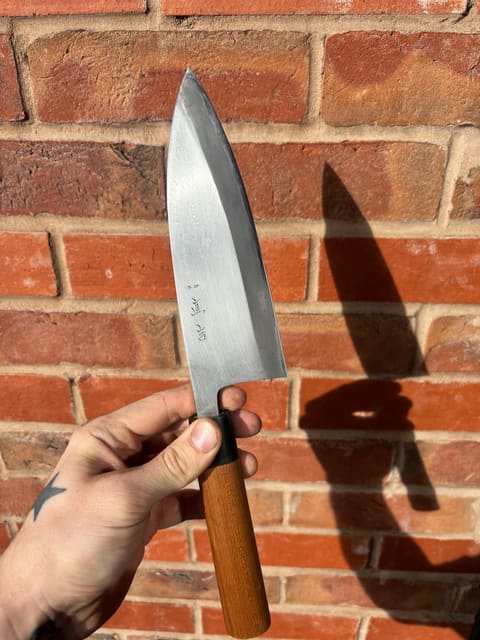
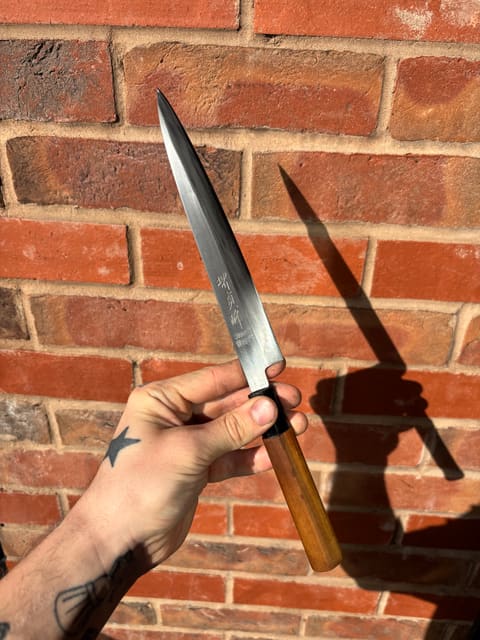
Knives waiting for a new home
Every knife here is one-of-one. When it's sold, it's gone — the next one will be different.
I buy blunt, rusted, forgotten knives and bring them back to life — reground, re-handled, and sharpened the way a professional kitchen actually needs. Yes, even the sad one at the back of your drawer.
Every knife here is one-of-one. When it's sold, it's gone — the next one will be different.
I've spent years on a professional line, and I can tell you plainly: the steel in a lot of modern mass-produced knives isn't built to last, and it isn't built to sharpen well either. Vintage Japanese blades — hand-forged in places like Sakai and Tsubame-Sanjo — were made by smiths who expected the knife to outlive them.
Most of what comes to the bench looks unusable — rust-black, chipped, blunt enough to be dangerous rather than safe. That's exactly why it's worth reviving. The steel underneath is very often better than anything you'd buy new for the same money.
Read my story“I sent in a knife I inherited that was basically a rust stick. It came back sharper than anything I've bought new — and it's still the same blade my grandfather used.”
Rust removal, structural repair, progressive whetstone sharpening, polishing, and handle revival — finished with a real test in a real kitchen, not a paper-slicing video.
Every knife gets the same first look I'd give one on my own line: check the steel, check the tang, check for cracks or heat damage that can't be undone.
Surface rust comes off by hand — no wire wheels, no power tools that generate heat and risk the temper.
Chips, cracks, and loose handles get fixed properly before any edge work starts.